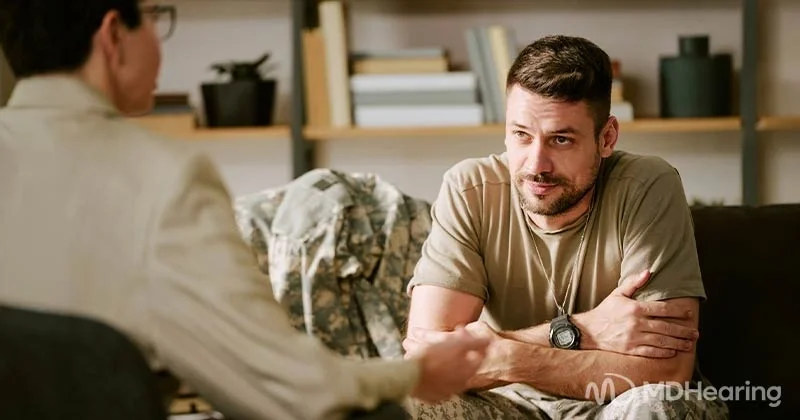
Military noise exposure can damage the delicate structures in the inner ear responsible for hearing. For some veterans, the effects are noticeable immediately; for others, hearing difficulties may go unrecognized until they begin affecting everyday conversations and relationships.
In this blog, we’ll explore the risks of hearing loss after military service, explain which early signs to watch for, and discuss the steps veterans can take to understand their hearing health and explore appropriate care.
Key Takeaways
Veterans may experience hearing loss related to loud sounds encountered during active duty, including gunfire, explosions, aircraft, and heavy equipment.
Hearing difficulties may become noticeable during service or later in life, although symptoms that appear years afterward do not automatically establish that military service caused them.
Tinnitus, difficulty understanding conversations, and frequently asking others to repeat themselves can be signs of a hearing problem.
A hearing evaluation can help identify the type and degree of hearing loss and guide next steps.
Treatment options vary by individual and may include hearing aids, assistive listening technology, communication strategies, or additional medical care.
Why Do Veterans Experience Hearing Loss?
Several factors may contribute to veteran hearing loss, and more than one can affect the same person.
1. Loud Noise During Military Service
Military personnel may encounter high-intensity sounds from firearms, artillery, explosions, aircraft, helicopters, engines, and machinery. Both a single extremely loud sound and repeated exposure to hazardous noise can damage hearing.
The risk depends on factors such as the sound's intensity, duration, frequency, and the hearing protection available. Even when protective equipment is used, some exposures may still pose a risk.
2. Blast Exposure and Head Injuries
Blast events and head injuries can affect hearing in different ways. A blast may damage the ear directly, while a traumatic brain injury may affect the pathways involved in processing sound. Some people experience hearing difficulties, tinnitus, dizziness, or other symptoms following these events.
Anyone with new or worsening hearing problems after a head injury or blast should seek medical assessment.
3. Aging and Other Health Factors
Hearing can change with age, and these changes may occur alongside damage associated with earlier noise exposure. Certain health conditions, ear problems, and medications can also affect hearing.
For this reason, a clinician may consider a person's full medical history, noise exposure, symptoms, and hearing test results rather than assuming there is only one cause.
4. Noise Exposure After Leaving the Military
Noise exposure does not necessarily end when military service does. Construction work, manufacturing, power tools, loud recreational activities, and other environments can also put hearing at risk.
Protecting hearing throughout life is important, especially for people who already have difficulty hearing.
What Are the Signs of Hearing Loss in Veterans?
The signs of hearing loss can develop gradually, making them easy to overlook.
Possible signs include:
Frequently asking people to repeat themselves.
Having trouble understanding speech in restaurants, group conversations, or other noisy environments.
Turning up the television or phone volume higher than others prefer.
Missing parts of conversations, particularly when someone speaks from another room.
Struggling to hear higher-pitched sounds.
Feeling tired or frustrated after listening for extended periods.
Experiencing ringing, buzzing, or other sounds in the ears.
These symptoms do not confirm hearing loss on their own. If they persist or begin interfering with daily life, a hearing evaluation can help determine what is happening.
Sudden hearing loss, particularly in one ear, requires urgent medical attention. Do not wait for a routine hearing appointment if hearing changes occur suddenly.
Can Tinnitus Be a Sign of Hearing Damage?
Yes. Tinnitus in veterans may be associated with noise exposure, hearing loss, head injuries, or other health conditions. Tinnitus is the perception of sound, often ringing, buzzing, humming, or hissing, when no corresponding external sound is present.
Tinnitus can occur with or without measurable hearing loss. It may be temporary or persistent, and its impact varies from person to person. For some people, it can interfere with sleep, concentration, or conversations.
How Can Family Members Recognize Hearing Problems?
Family members are sometimes the first to notice changes in a veteran's hearing. A veteran may not realize how often they miss words, particularly if the changes have happened gradually.
You may notice that your veteran family member:
Frequently asks you to repeat yourself.
Misunderstands questions or responds in ways that do not quite fit the conversation.
Avoids restaurants, family gatherings, or other settings where several people speak at once.
Turn up the television or other devices.
Appears withdrawn or frustrated during conversations.
These changes can have many explanations, so it’s best to approach the topic with patience rather than blame. Encourage them to consider a hearing evaluation as a practical step toward understanding the problem.
When Should Veterans Get a Hearing Test?
Veterans should consider a hearing evaluation if they have ongoing difficulty understanding speech, persistent tinnitus, or other changes in their hearing. An evaluation may also be appropriate after significant noise exposure or a head injury, even when symptoms seem mild.
A hearing professional may ask about military duties, past noise exposure, current symptoms, medical history, and any previous hearing tests. Testing can help identify the type and degree of hearing loss and whether additional medical evaluation is needed.
Are you wondering if you’re actually experiencing hearing difficulties? Take our online hearing test.
If you believe your hearing difficulties may be hearing loss related to military service, eligible veterans in the United States can contact the Department of Veterans Affairs (VA) to ask about hearing evaluations and available hearing healthcare services. Veterans who think their condition may be service-connected can also ask the VA about the process for filing a disability claim.
Visit the VA Audiology Services page to learn about hearing evaluations and treatment options, or review the VA's healthcare eligibility requirements to learn how to apply.
What Are the Treatment Options for Hearing Loss?
The appropriate hearing loss treatment depends on the cause, type, and severity of the hearing problem. Some conditions, such as earwax buildup or certain ear infections, may be treatable. Permanent sensorineural hearing loss generally cannot be reversed with currently available routine treatments, but several options can help people improve their hearing and communicate more effectively.
Possible options include:
OTC hearing aids: These devices amplify sounds and may improve the ability to hear speech and other everyday sounds for people with mild to moderate hearing loss.
Communication strategies: Facing the speaker, reducing background noise, using captions, and asking others to speak clearly can make conversations easier to follow.
Tinnitus management: Depending on the symptoms, care may include counseling, sound-based strategies, or treatment of an underlying contributing condition.
Medical or specialist care: Some symptoms require evaluation by a physician or an ear, nose, and throat specialist, particularly when hearing changes are severe, sudden, painful, one-sided, or accompanied by other concerning symptoms.
A hearing professional can explain which options are suitable based on test results and individual listening needs.
Why Are OTC Hearing Aids Helpful for Veterans?
For many people with hearing loss, OTC hearing aids can improve access to speech and everyday sounds. The right device depends on the person's hearing test results, listening environments, dexterity, budget, and preferences.
Veterans researching hearing aids for veterans may want to confirm eligibility and coverage directly with the VA, as benefits and requirements can vary. If hearing problems are affecting everyday communication, you can compare affordable options at MDHearing designed to help you hear conversations more clearly and feel more confident in your daily life.
Take the Next Step Toward Better Hearing
Hearing difficulties can affect everyday conversations, relationships, and quality of life, but finding the right hearing solution can help you feel more connected and confident.
This Veterans Day, MDHearing is making better hearing more affordable with 15% off select hearing aid pairs starting on November 9th. Shop the special Veterans Day promotion to explore available hearing aids, compare your options, and find a solution that fits your hearing needs and budget. Take advantage of this limited-time offer and take the next step toward clearer conversations with MDHearing.
MDHearing has multiple hearing aid options for you.
COMPARE OUR HEARING AID OPTIONS
Frequently Asked Questions
Can hearing loss from military service appear years later?
A veteran may notice hearing difficulties years after service because hearing changes can develop gradually or go unrecognized. However, there is evidence that noise exposure alone routinely causes hearing loss to begin years after exposure has ended. A professional evaluation can help assess possible causes.
Is tinnitus always a sign of hearing loss?
No. Tinnitus can occur with or without measurable hearing loss. Because it has several possible causes, persistent or concerning tinnitus should be discussed with a healthcare professional.
Can hearing loss in veterans be reversed?
It depends on the cause. Some problems, such as hearing difficulties associated with earwax buildup, may be treatable. Permanent noise-induced hearing loss generally cannot be reversed, but hearing aids and other support options are designed to improve communication. The NIH explains that damage to inner-ear sensory hair cells can lead to permanent hearing loss, even when symptoms are not immediately noticeable.
How can a veteran find out whether hearing loss is connected to military service?
A hearing evaluation can help document the type and degree of hearing loss. A clinician may consider service history, noise exposure, symptoms, medical records, and other possible causes. Veterans in the United States can contact the VA to ask about hearing healthcare and the process for pursuing a service-connected disability claim.