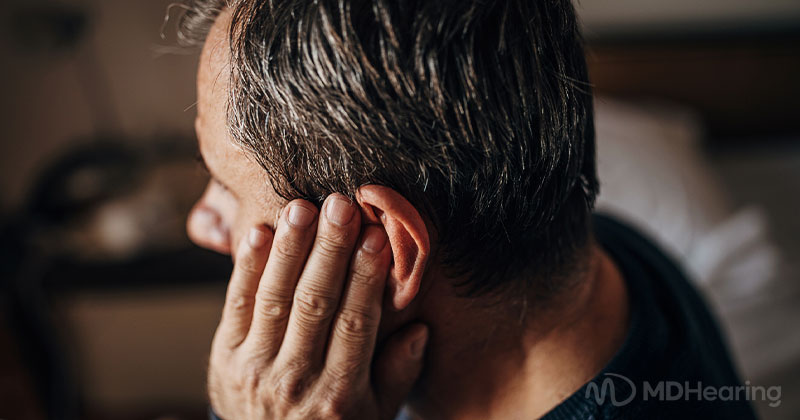
Have you found yourself asking people to repeat themselves more often? Do conversations seem harder to follow in restaurants or family gatherings? These subtle changes are often among the first signs of hearing loss.
Because hearing loss typically develops gradually, many people don't recognize the symptoms right away. Learning the warning signs can help you take action sooner and stay connected to the people and moments that matter most. In this article, we'll go over the common signs of hearing loss, as well as the different types of hearing loss, causes, and possible treatments.
10 Common Signs of Hearing Loss
Unlike a sudden injury, hearing loss usually develops little by little over time. Many people adapt without realizing it—turning up the television, relying on subtitles, nodding along when they didn't quite catch what was said, or avoiding social settings and noisy environments. In fact, family members often notice the signs before the person experiencing hearing loss does.
However, knowing what to look for can help you identify early symptoms. If you’ve experienced any of these signs, you may have hearing loss:
1. Conversations are hard to follow
Hearing loss may be most noticeable when you're having conversations, particularly when more than two people are speaking. This can be even more prominent when you're in a noisy setting like a crowded restaurant or talking with soft-spoken people.
2. People seem to be mumbling
If it feels like everyone is mumbling, the issue probably isn't how people are speaking. Hearing loss often makes certain speech sounds harder to distinguish, especially consonants, causing words to sound unclear even when others are speaking normally.
3. Difficulty talking on the phone
Like face-to-face conversations, phone calls can also be challenging. The person on the other end may sound unclear or like they're mumbling. Phone conversations can be especially difficult because you don't have visual cues—such as facial expressions and lip reading—to help you understand what's being said.
4. Asking others to repeat themselves or to speak up
You find yourself frequently asking people to repeat themselves, or requesting they speak louder, slower, and clearer so you can better understand them.
5. Turning up the volume on the TV or radio
You may not realize it, but you might be turning up the TV or radio to an unhealthy volume level. Subsequently, your spouse, children, or other people in the home complain that it’s too loud. You may also find yourself relying more on closed captions, even when the volume is turned up.
6. Trouble hearing high-pitched sounds
High-pitched sounds, such as bird chirps, doorbell chimes, cell phone ringtones, and alarm clocks, are difficult to hear. You may also have trouble understanding women and children, whose voices are typically higher-pitched than men's voices.
7. Inability to hear consonants
You are not able to distinguish the difference between certain consonants, such as "s" and "f," "p" and "t," or "sh" and "th."
8. Ringing in the ear
Ringing, buzzing, hissing, or clicking sounds in the ears—known as tinnitus—often occur alongside hearing loss. While tinnitus doesn't always indicate hearing loss, the two conditions frequently occur together.
9. Listening fatigue
Hearing loss can make your brain work overtime to understand speech. Constantly concentrating, filling in missed words, and straining to follow conversations can lead to "listening fatigue"—a feeling of mental exhaustion after social interactions, phone calls, or time spent in noisy environments.
10. Falling or having trouble balancing
Your hearing and balance are closely connected. In some cases, hearing loss can affect your sense of stability, making you feel unsteady on your feet or more prone to falls. Some people may also experience vertigo—a sensation of spinning or dizziness that can affect balance and coordination.
Types of Hearing Loss
Hearing loss is one of the most common health conditions affecting older adults. Approximately 15% of American adults report some trouble hearing. About one in three people between ages 65 and 74 has hearing loss, and nearly half of adults over age 75 experience difficulty hearing.
Your level of hearing loss—mild, moderate, severe, or profound—is determined by your ability to hear certain frequencies (Hz). A decibel chart can help you get a good idea of the sounds heard at different levels.
There are three general types of hearing loss:
Sensorineural hearing loss (damage to inner ear)
Conductive hearing loss (blockage in the outer or middle ear)
Mixed hearing loss (a combination of the two)
Sensorineural hearing loss is the most common type and typically involves permanent damage to the inner ear’s nerve cells. It is also the type most often associated with age-related hearing loss, also known as presbycusis, which develops gradually in both ears over time.
Causes of Hearing Loss

Long-term exposure to loud noise and aging are two of the most common causes of hearing loss. However, there are numerous causes of hearing loss, including:
Age
Loud noises
Fluid and ear wax buildup
Injuries and infections (e.g., ruptured eardrum, measles, mumps)
Ototoxic medications
Genetics
Tumors and other abnormal growths (e.g., otosclerosis)
Diseases and other medical conditions (e.g., Meniere’s disease, stroke, diabetes, high fever)
Regardless of the cause, it's essential to seek treatment for your hearing loss. Issues left unaddressed can have detrimental health effects, including further damage to your ears, worsened hearing loss, social isolation, and increased risk of dementia, falls, and hospital visits.
Hearing Loss Prevention and Treatment
Hearing loss typically cannot be reversed, which is why it is so important to take steps to protect your hearing:
Protect your ears from loud noises: Exposure to loud noise can damage the tiny hair cells in your inner ears, resulting in permanent hearing damage. You can prevent most noise-related hearing loss by limiting the volume on your devices, moving away from loud noise, and wearing noise-canceling headphones or earplugs in noisy environments like concerts, motorsports, fireworks, and when using power equipment.
Avoid ototoxic medications: Use of ototoxic medications can also damage sensory cells in the inner ear, which are responsible for hearing and balance, and may lead to temporary or permanent damage. When you can, avoid ototoxic medications such as certain antibiotics (gentamicin); chemotherapy drugs (cisplatin and carboplatin); salicylate pain relievers (aspirin); malaria drugs (quinine); and kidney and heart medications (diuretics).
While conductive hearing loss is often temporary or reversible, sensorineural hearing loss is permanent. It's vital to test your hearing regularly and seek treatment to help you stay engaged in conversations and daily activities, as well as prevent further health issues.
Hearing aids are the most common solution for sensorineural hearing loss and can make speech clearer, improve awareness of your surroundings, decrease risk of dementia, and enhance your quality of life. Modern hearing aids, such as a rechargeable OTC hearing aid like the VOLT 4, are smaller, more comfortable, and easier to use than ever before. They're available over the counter and without a prescription, making them more affordable and accessible.
Do You Have Signs of Hearing Loss?
If you recognize any of these signs in yourself or a loved one, consider taking a hearing test. Early action can help you better understand your hearing and explore solutions before hearing difficulties begin affecting your daily life. You can now conveniently check your hearing from the comfort of your home with MDHearing's free online hearing test and receive your results immediately.
At MDHearing, we offer several affordable FDA-registered OTC hearing aids that are backed by U.S.-based support from licensed hearing professionals and a 60-day free trial.
Get started with a free online hearing test today.
TAKE ONLINE HEARING TEST